8,700 Studies Reviewed. 87.0% Found Biological Effects. The Evidence is Clear.
Research Guide

Airplane Radiation: What the Science Actually Shows

Based on 1,868 peer-reviewed studies

Calculate Your Flight Radiation
Share:
At a Glance

Research suggests airplane travel exposes passengers to multiple forms of radiation, including cosmic radiation at high altitudes and electromagnetic fields from onboard WiFi systems. Based on 4447 studies, up to 93.5% found biological effects from electromagnetic exposures, though airplane-specific research remains limited.

Based on analysis of 1,868 peer-reviewed studies

Every time you fly, you are exposed to two distinct types of radiation. The first is cosmic radiation - high-energy particles from space that Earth's atmosphere normally shields you from, but that penetrate more easily at cruising altitude. The second is non-ionizing electromagnetic radiation from the aircraft's WiFi system, your personal devices, and onboard electronics - all concentrated inside a metal fuselage that reflects and contains these signals.

Most flight radiation calculators only address the cosmic side. This guide covers both, drawing on peer-reviewed research from our database of 8,700+ studies on electromagnetic radiation and health effects. Below, you can estimate your exposure for any specific flight and see the studies that document health effects at comparable levels.

Key Findings

  • -Cosmic radiation exposure increases dramatically at cruising altitudes, with doses 100-300 times higher than at ground level
  • -WiFi and cellular systems on aircraft emit radiofrequency radiation directly into passenger cabins at close range
  • -Flight attendants and pilots show elevated cancer rates in some studies, particularly breast cancer and melanoma
  • -Pregnant women and children may face heightened risks, as developing tissues appear more vulnerable to radiation exposure
  • -Limited airplane-specific research means long-term health effects from combined exposures remain poorly understood

What the Research Shows

When you board an airplane, you encounter a unique combination of radiation exposures that don't exist elsewhere in daily life. The science reveals two primary sources: cosmic radiation from space and electromagnetic fields from onboard wireless systems.

Cosmic Radiation at Altitude

At cruising altitude (30,000-40,000 feet), cosmic radiation exposure increases dramatically. The thin atmosphere provides less protection from high-energy particles streaming from space. Research indicates passengers receive radiation doses 100-300 times higher than at ground level.

For perspective, a cross-country flight exposes you to roughly the same radiation dose as a chest X-ray. Frequent fliers accumulate significant exposure - pilots and flight attendants are classified as radiation workers by some regulatory agencies due to their occupational cosmic radiation exposure.

Onboard Electromagnetic Fields

Modern aircraft feature extensive wireless systems: WiFi networks, cellular connectivity, and internal communication systems. These emit radiofrequency radiation throughout the passenger cabin. Unlike ground-based exposures where you can maintain distance, airplane WiFi systems operate in close proximity to passengers in an enclosed metal tube.

The research on electromagnetic field effects spanning decades shows biological responses across multiple endpoints. While airplane-specific studies are scarce, the fundamental physics remain the same - radiofrequency radiation interacts with biological tissues regardless of altitude.

Health Effects in Aviation Workers

Epidemiological studies of flight crews provide concerning insights. Research indicates elevated rates of certain cancers among flight attendants, particularly breast cancer and melanoma. These populations face both cosmic radiation and occupational electromagnetic exposures.

However, establishing causation proves challenging. Flight crews have unique lifestyle factors - disrupted circadian rhythms, irregular schedules, and potential chemical exposures - that complicate direct attribution to radiation exposure alone.

Vulnerable Populations

The evidence strongly suggests heightened vulnerability in developing organisms. Research teams studying children and adolescents consistently find greater sensitivity to electromagnetic exposures. This raises particular concerns for pregnant women and young children during air travel.

Developing tissues have higher cell division rates and less mature DNA repair mechanisms. What might be a tolerable exposure for adults could potentially cause greater effects in developing systems.

Limitations and Unknowns

The reality is that comprehensive studies on airplane radiation health effects remain remarkably sparse. Most electromagnetic field research focuses on ground-based exposures - cell phones, WiFi routers, and power lines. The unique combination of cosmic radiation plus onboard EMF exposures hasn't been thoroughly investigated.

This research gap means we're essentially conducting an uncontrolled experiment on millions of daily air passengers. The aviation industry has grown exponentially while health research lags behind.

What This Means for You

While we can't avoid cosmic radiation during flight, you can reduce electromagnetic exposures. Consider using airplane mode except when necessary, avoid prolonged laptop use on your body, and minimize time spent near onboard WiFi access points.

For frequent fliers, pregnant women, and families with children, these precautions become more important. The cumulative nature of radiation exposure means every reduction helps lower your total dose over time.

Flight Radiation Calculator

Estimate your cosmic radiation and RF/EMF exposure on any commercial flight, backed by peer-reviewed research.

Related Studies (1,868)

EXPOSURE OF PREGNANT MICE TO 2.45 GHz MICROWAVE RADIATION

Unknown authors

This technical report examined the effects of 2.45 GHz microwave radiation exposure on pregnant mice, focusing on potential developmental impacts during pregnancy. The research investigated whether microwave radiation at this frequency could cause birth defects or other reproductive harm. This frequency is commonly used in microwave ovens and some wireless devices, making the findings relevant to human exposure concerns.

DUAL ACTIONS OF MICROWAVES ON SERUM CORTICOSTERONE IN RATS

Unknown authors

Researchers exposed rats to 2.45 GHz microwave radiation (the same frequency used in microwave ovens and WiFi) at various power levels for 4 hours and measured stress hormone levels. They found a surprising dual effect: low-level exposures actually suppressed the normal rise in corticosterone (stress hormone), while high-level exposures dramatically increased it. This suggests microwave radiation can disrupt the body's natural stress response system in complex ways.

REPORT OF AD HOC COMMITTEE ON A MEDICAL SURVEILLANCE PROGRAM FOR RF/MW WORKERS, ANSI C-95

Unknown authors

This technical report from the ANSI C-95 Ad Hoc Committee examined medical surveillance programs for workers exposed to radiofrequency and microwave radiation. The committee assessed how to monitor the health of employees working with RF/MW equipment in industrial and telecommunications settings. This represents early recognition that occupational RF exposure required systematic health monitoring protocols.

LASERS AND MICROWAVES Part II LASERS

William T. Ham, Jr., A. M. Clarke

This technical report by W.T. Ham Jr. examined the biological effects of laser radiation, focusing on optical electromagnetic sources and their potential health impacts. The research was part of a broader investigation into both laser and microwave radiation effects on biological systems. This type of foundational research helps establish safety standards for laser devices used in medical, industrial, and consumer applications.

PHYSIOLOGIC RESPONSE OF RATS TO HYPERTHERMIA INDUCED BY EXPOSURE TO 2450 MHZ MICROWAVE RADIATION

Phillips, Richard D., Hunt, Evans L., King, Nancy W.

Researchers exposed rats to 2450 MHz microwave radiation (the same frequency used in microwave ovens and some WiFi) for 30 minutes at different power levels. They found that even moderate exposure levels caused temperature changes, slowed heart rate, and reduced metabolism for hours after exposure ended. The effects were dose-dependent, meaning higher power levels caused more severe and longer-lasting physiological disruptions.

EFFETS BIOLOGIQUES DES RAYONNEMENTS ELECTROMAGNETIQUES U.H.F. (radars)

R. JOLY, B. SERVANTIE

French researchers examined how radar frequencies (300-30,000 MHz) affect human tissues and biological systems. They found that these high-frequency electromagnetic radiations, typically emitted in pulses for radar detection, produce measurable biological effects in living tissue. The effects depend on the radiation's physical characteristics, penetration depth, power density, and exposure duration.

WHY THE DOUBLE STANDARD? A CRITICAL REVIEW OF RUSSIAN WORK ON THE HAZARDS OF MICROWAVE RADIATION

Leo P. Inglis

This technical report critically examines Russian research on microwave radiation hazards, comparing their findings and exposure standards to Western approaches. The analysis highlights significant differences between Russian and Western safety standards for microwave exposure. This work provides important context for understanding global variations in EMF safety guidelines.

MICROWAVE INDUCED PRESSURE WAVES IN A MODEL OF BIOLOGICAL MATERIAL

Richard G. Olsen, Wayne C. Hammer

Researchers exposed simulated muscle tissue to high-powered radar pulses at 5.655 GHz and discovered that microwaves created detectable pressure waves that traveled through the material at 1600 meters per second. The waves remained measurable even after traveling over half a meter and bouncing off surfaces twice, suggesting microwave energy can create mechanical effects far from the original exposure site.

EXPOSURE LIMITS FOR MICROWAVE RADIATION - A CANADIAN PROPOSAL

Michael H. Repacholi

This Canadian research proposal by MH Repacholi examined microwave radiation exposure limits and radiation protection standards. The study focused on developing appropriate safety guidelines for microwave frequency electromagnetic fields, incorporating the ALARA principle (As Low As Reasonably Achievable). This work contributed to the scientific foundation for establishing public health protection standards against microwave radiation exposure.

Microwave Radiation Hazards

Morgan

This research examined the health hazards associated with microwave radiation exposure in humans, particularly focusing on radar-related sources. The study investigated the biological effects of microwave frequencies on human health. This type of research was foundational in establishing our understanding of how microwave radiation can affect the human body.

EXPERIMENTAL DESIGNS IN THE STUDY OF BIOLOGICAL EFFECTS DURING RADIO FREQUENCY TRANSMISSION

William Pearlman, Maitland Baldwin

Researchers designed an experimental system using copper mesh resonant cavities to expose monkey heads to radio frequency energy between 225-400 MHz from a 100-watt transmitter. This early study established methodology for controlled RF exposure experiments on primates. The research represents foundational work in understanding how to systematically study biological effects of radio frequency radiation.

Comparison of Potential Device Interference and Biological Exposure Hazards in Microwave Leakage Fields

John M. Osepchuk

Researchers examined how microwave radiation from sources like ovens and industrial equipment interferes with electronic devices, including medical devices like pacemakers. The study found that while microwave leakage can disrupt sensitive electronics, the interference occurs at radiation levels far below what would cause biological harm to humans. Proper shielding and filtering techniques can effectively protect vulnerable devices from microwave interference.

MICROWAVES AFFECT THERMOREGULATORY BEHAVIOR IN RATS

Stern

This research by Stern examined how microwave radiation at 2450 MHz affects temperature regulation behavior in laboratory rats. The study found that microwave exposure altered how rats naturally respond to temperature changes, suggesting these electromagnetic fields can disrupt biological processes that control body temperature. This matters because it demonstrates microwaves can affect fundamental biological functions beyond just heating tissue.

CardiovascularNo Effects Found

EFFECT OF MICROWAVES ON RED BLOOD CELL COMPONENTS: INVESTIGATIONS AT THE MOLECULAR LEVEL

Unknown authors

Scientists used advanced spectroscopy to examine red blood cells exposed to 2.4 GHz microwave radiation at power levels between 1-25 mW/cm². They found no molecular changes in hemoglobin structure, spin state, or oxidation even at these relatively high exposure levels. This suggests red blood cells may be more resilient to microwave radiation than previously thought.

Frequently Asked Questions

Cosmic radiation exposure at cruising altitude ranges from 2-10 microsieverts per hour, roughly 100-300 times higher than ground level. A typical cross-country flight delivers radiation exposure equivalent to a chest X-ray. Flight crews are classified as radiation workers due to their occupational cosmic radiation exposure.
Research suggests airplane WiFi systems emit radiofrequency radiation directly into passenger cabins at close range. Up to 93.5% of electromagnetic field studies find biological effects, though airplane-specific research remains limited. Using airplane mode when possible and minimizing device use can reduce exposure during flights.
Research indicates developing tissues may be more vulnerable to radiation exposure than adult tissues. Pregnant women face both cosmic radiation and electromagnetic fields during flight. While occasional flying appears to pose minimal risk, frequent air travel during pregnancy warrants consideration of cumulative exposure levels.
A cross-country flight delivers roughly the same cosmic radiation dose as a chest X-ray (about 0.02-0.1 mSv). However, airplane exposure includes both cosmic radiation and electromagnetic fields from onboard systems. The exposure duration differs significantly - flights last hours while X-rays are instantaneous.

Further Reading

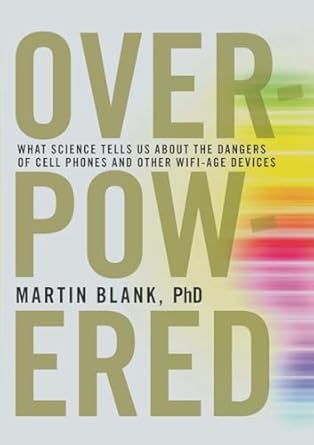
For a comprehensive exploration of EMF health effects and practical protection strategies, explore these books by R Blank and Dr. Martin Blank.