8,700 Studies Reviewed. 87.0% Found Biological Effects. The Evidence is Clear.
Research Guide

EMF and Children's Brain Development: What Studies Show

Based on 1,956 peer-reviewed studies

Share:
At a Glance

Research suggests children's developing brains may be more vulnerable to electromagnetic radiation effects. Based on 2950 studies, with up to 83.8% finding bioeffects, evidence indicates heightened susceptibility during critical development periods, though long-term human studies remain limited.

Based on analysis of 1,956 peer-reviewed studies

Children's brains are fundamentally different from adult brains—not just smaller, but actively developing, forming new neural connections, and undergoing critical periods of growth. This raises important questions about how electromagnetic field exposure might affect the developing brain.

Researchers have approached this question through multiple methods: measuring how much RF energy children's brains absorb compared to adults, studying cognitive outcomes in children with various EMF exposures, and examining brain tissue effects in laboratory settings.

This page presents the scientific evidence on EMF exposure and childhood brain development.

Key Findings

  • -83.8% of 2950 studies examining EMF bioeffects found measurable impacts across different exposure types and biological systems
  • -Laboratory studies spanning up to one year demonstrate that newborns, children, and adolescents show particular vulnerability to EMF exposure compared to adults
  • -Meta-analysis research identifies associations between parental occupational EMF exposure and increased childhood nervous system tumor risk
  • -Neurological pathways including serotonin systems show alterations under EMF exposure in developing organisms
  • -Limited long-term human studies create knowledge gaps, though available research suggests precautionary approaches for children

What the Research Shows

Current State of Research

The scientific evidence surrounding electromagnetic field effects on children's brain development presents a compelling case for heightened concern. Research indicates that developing brains may face greater vulnerability to EMF exposure than mature neural systems. Margaritis et al. (2014) emphasize that while definitive long-term data remains limited, multiple research teams have documented particular susceptibility in newborns, children, and adolescents.

Why Children May Be More Vulnerable

Several biological factors contribute to children's increased EMF susceptibility. Their developing nervous systems undergo rapid cell division and migration, processes that EMF exposure may disrupt. The skull thickness in children provides less natural shielding than adult bone structure. Additionally, children's higher brain water content may facilitate deeper EMF penetration.

Laboratory studies using rodent models provide important insights. Since laboratory rats and mice live approximately two years, year-long exposure studies represent significant portions of their lifespans, offering relevant parallels for human childhood development. These studies consistently demonstrate neurological impacts that suggest similar vulnerabilities in human children.

Specific Research Findings

Epidemiological research has identified concerning patterns. A comprehensive meta-analysis (2018) examining parental occupational exposure to extremely low frequency magnetic fields found associations with increased childhood nervous system tumor risk. This suggests that even indirect exposure during critical developmental periods may carry consequences.

Neurobiological research reveals specific mechanisms through which EMF exposure affects developing systems. Recent studies (2022) demonstrate that moderate-intensity magnetic fields alter serotonin pathways, affecting both behavioral patterns and metabolic processes. These findings indicate that EMF exposure impacts fundamental neurotransmitter systems crucial for proper brain development.

Historical Context and Early Research

The foundation for understanding EMF effects on children traces back decades. Wertheimer and Leeper's landmark 1979 study first identified connections between electrical wiring configurations and childhood cancer, establishing the groundwork for subsequent research into pediatric EMF vulnerability.

Research Limitations and Gaps

The current research landscape presents both strengths and limitations. While laboratory studies provide controlled evidence of bioeffects, long-term human epidemiological studies remain scarce. Most existing human research involves relatively small sample sizes or short observation periods. The rapid evolution of wireless technology also means that exposure patterns studied may not reflect current childhood EMF environments.

Put simply, we're conducting a real-time experiment with children's developing brains without adequate long-term safety data. The evidence shows measurable biological effects, but the full scope of consequences may not manifest for years or decades.

Implications for Parents and Policymakers

What this means for you is that precautionary approaches appear warranted based on current evidence. The research demonstrates that children's developing brains respond differently to EMF exposure than adult brains. While we cannot definitively predict long-term outcomes, the biological plausibility of effects combined with documented vulnerabilities suggests protective measures make scientific sense.

The reality is that regulatory standards were established primarily based on adult thermal effects, not considering developmental vulnerabilities or non-thermal biological impacts. This creates a gap between regulatory compliance and potential biological protection for children.

Related Studies (1,956)

CHRONIC EXPOSURE OF RATS TO 100-MHz (CW): ASSESSMENT OF BIOLOGICAL EFFECTS

Unknown authors

Researchers exposed pregnant rats and their offspring to 100-MHz radiofrequency radiation for 4 hours daily throughout pregnancy and early development. While most health measures remained normal, the study found significant changes in brain acetylcholinesterase activity, an enzyme crucial for nerve function. This suggests that chronic RF exposure during critical development periods may affect brain chemistry even when other health indicators appear unaffected.

ALTERATION OF REPEATED ACQUISITION IN RATS BY MICROWAVE RADIATION

Unknown authors

Researchers exposed rats to 2800 MHz microwave radiation for 90 minutes before testing their ability to learn new sequences of behaviors. At higher power levels (5-10 mW/cm²), the microwaves disrupted the rats' learning ability, causing more errors and slower completion of tasks. This demonstrates that microwave radiation can impair cognitive function even at relatively low exposure levels.

INDUCTION OF CALCIUM ION EFFLUX FROM BRAIN TISSUE BY R.F. RADIATION: EFFECT OF SAMPLE NUMBER AND MODULATION FREQUENCY ON THE FIELD-STRENGTH WINDOW

Unknown authors

Researchers exposed brain tissue to 147 MHz radiation modulated at 16 Hz and found it caused calcium ions to leak from cells at specific power levels (0.75 mW/cm²). The effect occurred within a narrow "window" of field strength, and the width of this window changed depending on how many tissue samples were tested at once.

Tan FC, Yalçin B, Yay AH, Tan B, Yeğin K, Daşdağ S

Unknown authors

Turkish researchers exposed rats to WiFi-frequency radiation (2450 MHz) for 12 hours daily across four generations, starting before conception. They found brain hemorrhaging and cellular damage in fetuses and adult females, plus increased stress proteins linked to memory problems in male brains. The damage persisted and potentially worsened across generations.

What This Means for You

  1. Children's developing brains may be more susceptible to EMF effects than adult brains.
  2. Limit screen time and device use, especially for younger children.
  3. Use speakerphone or wired headphones instead of holding phones to children's heads.
  4. Shield your child's phone with a radiation-deflecting pouch. SYB Phone Pouch

Frequently Asked Questions

Research suggests EMF exposure may impact developing brains through multiple pathways. Laboratory studies demonstrate effects on neurotransmitter systems like serotonin, while epidemiological research identifies associations with nervous system tumor risk. However, long-term human studies remain limited, creating uncertainty about full developmental consequences.
Evidence indicates children face heightened EMF vulnerability compared to adults. Their developing nervous systems undergo rapid cellular changes that EMF may disrupt, thinner skull bones provide less natural shielding, and higher brain water content may allow deeper radiation penetration. Multiple research teams have documented this increased susceptibility in laboratory studies.
Research suggests the greatest vulnerability occurs during periods of rapid brain development - from prenatal stages through adolescence. Newborns and young children appear particularly susceptible due to ongoing neural formation and migration. The developing brain's high metabolic activity and cellular division rates may amplify EMF effects during these critical periods.
Current evidence suggests minimizing children's cell phone use, particularly for calls held against the head. Many health authorities recommend text messaging, speakerphone, or earbuds to increase distance from the brain. The American Academy of Pediatrics and other medical organizations advise limiting children's wireless device exposure as a precautionary measure.

Further Reading

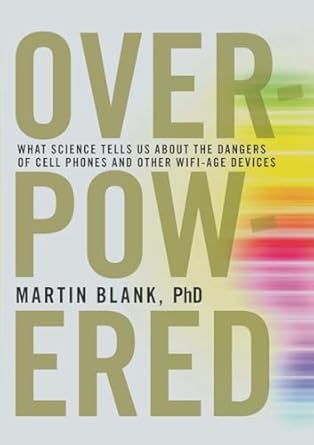
For a comprehensive exploration of EMF health effects and practical protection strategies, explore these books by R Blank and Dr. Martin Blank.