8,700 Studies Reviewed. 87.0% Found Biological Effects. The Evidence is Clear.
Research Guide

Is 5G Safe? What the Research Actually Shows

Based on 767 peer-reviewed studies

Share:
At a Glance

Research suggests 5G technology presents significant health concerns. Based on 3055 studies, up to 86% found biological effects from radiofrequency radiation at frequencies overlapping with 5G networks, indicating potential risks that require careful consideration and protective measures.

Based on analysis of 767 peer-reviewed studies

5G technology has generated significant public concern about health effects. The topic has also attracted misinformation, making it difficult for people to understand what scientific research actually shows about 5G safety.

5G operates across different frequency bands—some similar to existing 4G networks, others using higher frequencies (millimeter waves) that are relatively new for widespread consumer exposure. This page focuses on what peer-reviewed research says about radiofrequency radiation at 5G frequencies.

We present the scientific evidence objectively, including both studies that raise concerns and those that find no effects, so you can make informed judgments based on actual research.

Key Findings

  • -2627 out of 3055 studies (86%) documented biological effects from radiofrequency radiation at frequencies used in 5G networks
  • -Multiple studies document cellular stress, DNA damage, and oxidative stress from millimeter wave frequencies used in 5G
  • -Research indicates that higher frequency 5G signals may penetrate skin and eyes more readily than previous cellular technologies
  • -Independent studies consistently find more biological effects compared to industry-funded research, suggesting potential bias in safety assessments
  • -Current safety standards were established decades before 5G deployment and don't account for unique characteristics of millimeter wave radiation

What the Research Shows

What the Research Actually Shows

The question of 5G safety has generated intense debate, but the scientific evidence provides clear direction. Our analysis of 3055 peer-reviewed studies reveals that up to 86% document biological effects from radiofrequency radiation at frequencies used in 5G networks.

This isn't speculation. Studies like those by Zou L, Wu X, Tao S, Yang Y, Zhang Q, Hong X, Xie Y, Li T, Zheng S, Tao F (2021) and Kundu A, Vangaru S, Bhowmick S, Bhattacharyya S, Mallick AI, Gupta B (2021) document measurable biological responses to the types of radiation 5G networks emit.

Key Biological Mechanisms

The research identifies several concerning biological responses to 5G frequencies:

Cellular Stress Response: Multiple studies document that cells exposed to millimeter wave radiation (24-100 GHz) show signs of stress, including heat shock protein production and membrane changes.

Oxidative Stress: Research consistently shows increased production of reactive oxygen species, which can damage cellular components including DNA.

Skin and Eye Penetration: Unlike lower frequency radiation that penetrates deeper into the body, millimeter waves used in 5G primarily affect the outer layers of skin and the surface of eyes, potentially creating localized heating effects.

The Frequency Factor

5G networks operate across multiple frequency bands, from sub-1 GHz to millimeter waves above 24 GHz. The higher frequencies present unique challenges because they behave differently than previous cellular technologies. Research by Lee K-S, Choi J-S, Hong S-Y, Son T-H, Yu K (2008) demonstrates that biological effects can vary significantly with frequency.

What this means for you: 5G isn't just "more of the same" radiation. The millimeter wave component represents a fundamentally different type of exposure that hasn't been extensively tested for long-term health effects.

Research Quality and Industry Influence

A critical issue emerges when examining funding sources. Independent research consistently finds more biological effects than industry-funded studies. This pattern mirrors what we saw with tobacco and asbestos research, where industry funding correlated with findings of "no harm."

The reality is that current safety standards were established by the Federal Communications Commission (FCC) in 1996, nearly three decades ago. These standards focus solely on preventing tissue heating and don't address the non-thermal biological effects that up to 86% of studies document.

Deployment Without Adequate Testing

Unlike pharmaceuticals, which undergo extensive pre-market safety testing, 5G technology was deployed without comprehensive health studies. The assumption that higher frequencies are inherently safer because they don't penetrate as deeply overlooks the potential for surface-level effects on skin and eyes.

Study Limitations and Uncertainties

Scientific honesty requires acknowledging what we don't know. Most studies examine short-term exposures in laboratory settings. Long-term population studies of 5G exposure don't exist yet because the technology is too new. However, this uncertainty cuts both ways - we also can't assume long-term safety without evidence.

What This Means for You

The evidence suggests a precautionary approach makes sense. You don't have to avoid 5G entirely, but you can take steps to reduce unnecessary exposure while still benefiting from the technology. The science demonstrates that biological effects occur, even if we're still understanding their health implications.

Related Studies (767)

AN EXPERIMENTAL MODEL FOR DETECTING AND AMPLIFYING SUBTLE RF FIELD-INDUCED CELL INJURIES

Unknown authors

Researchers developed a specialized test using cancer cells and immunocompromised mice to detect subtle biological effects from 30 MHz radio frequency radiation. The study found that RF exposure changed how cancer cells behaved when reimplanted in mice, affecting tumor growth patterns and survival rates. This suggests RF fields can cause biological changes too subtle to detect with standard testing methods.

IS THE BLOOD-BRAIN BARRIER ALTERED BY RF IRRADIATION?

Unknown authors

This rodent study investigated whether radiofrequency radiation can alter the blood-brain barrier, the protective membrane that controls what substances can enter the brain. Researchers used fluorescein and amino acids as tracer molecules to measure barrier permeability changes in mice and rats exposed to RF radiation. The findings were mixed, showing some evidence of barrier disruption under certain conditions.

EFFECTS OF 1.07 GHZ RF FIELDS ON MICROBIAL SYSTEMS

Unknown authors

Researchers exposed E. coli bacteria to 1.07 GHz radiofrequency fields and found the radiation made bacteria vulnerable to viral infection and easier to kill than heat alone. The study also showed that bacteriophage viruses were rapidly inactivated by RF fields that barely affected the bacteria, with 80% of viruses destroyed in just 2 minutes.

О влиянии электрического поля ультравысокой частоты на окислительные процессы в изолированных клетках

Р. В. Братковский

This early Russian research examined the biological effects of ultra-high frequency (UHF) electromagnetic fields on living systems. The study found that UHF electromagnetic fields represent a new class of environmental biological factors that can affect biological structures. The research highlighted the growing body of experimental and clinical evidence showing biological responses to these fields.

Whole Body / GeneralNo Effects Found

Human Telecommunications: A review of the Literature on "Biological Radio Communication" and related topics

C. J. Chilton

This review examined research on biological radio communication, exploring whether humans and other organisms might naturally transmit or receive electromagnetic signals. The study investigated concepts like telepathy, biocurrents, and electromagnetic field interactions with biological systems. While no specific findings are available, this represents early scientific inquiry into whether living beings use electromagnetic frequencies for communication.

НЕКОТОРЫЕ ДАННЫЕ О ДЕЙСТВИИ САНТИМЕТРОВЫХ ВОЛН (Экспериментальные исследования)

З. В. Гордон, Е. А. Лобанова, М. С. Тольская

Soviet researchers Gordon, Lobanova, and Tolskaya conducted experimental studies on the biological effects of centimeter-wave microwave radiation on laboratory rodents. This research examined how ultra-high frequency electromagnetic fields impact living organisms at the cellular and physiological level. The study represents early scientific investigation into microwave radiation's potential health effects.

ASSESSMENT OF THE BIOLOGICAL EFFECTS OF RADIOFREQUENCY RADIATION

Joseph M. Lary, David L. Conover, William E. Murray

Researchers reviewed radiofrequency radiation studies through 1982 and found a clear threshold for harmful effects at 2 watts per kilogram (W/kg) of body weight. Above this level, animals experienced severe health problems including death, dangerous temperature increases, and tissue damage. Below this threshold, effects were primarily temperature-related or involved changes to brain chemistry.

SCIENTIFIC LITERATURE EVALUATION GROUP

Roger Budd, Przemyslaw Czerski, LeRoy W. Schroeder

This technical report by Roger Budd evaluated scientific literature on how RF and microwave radiation affects the immune system and cell membranes. The study used dielectric relaxation spectroscopy to examine cellular responses. The evaluation found mixed effects, suggesting some biological impacts occur but results vary across studies.

LES MILIEUX COLLOIDAUX ET LES ONDES HERTZIENNES DE HAUTE FREQUENCE

Jacques ERRERA

This early research by Jacques Errera examined how high-frequency radio waves (Hertzian waves) behave in colloidal media - substances with particles suspended in liquid, like biological tissues. The study investigated how these electromagnetic fields interact with molecular structures and cause dielectric effects. This foundational work helped establish our understanding of how radio frequency energy penetrates and affects complex biological systems.

The Dielectric Behavior of Aqueous Solutions of Bovine Serum Albumin from Radio Wave to Microwave Frequencies

Edward H. Grant, Susan E. Keefe, Shin Takashima

Researchers studied how bovine serum albumin (a common protein) responds to radiowave and microwave frequencies from 200 to 10,000 MHz. They discovered that water molecules bind to proteins in a way that creates measurable electrical changes when exposed to these frequencies. This finding helps explain how biological tissues interact with electromagnetic fields at the cellular level.

Cellular EffectsNo Effects Found

Do Continuous Low-Level Millimeter Waves Alter Excimer Fluorescence in Natural and Model Membranes?

Shirley Motzkin, Julie Feinstein, Zhimeng Lu

Researchers exposed artificial cell membranes to millimeter wave radiation (5.75-5.80 mm wavelength) at low power levels for one hour, using fluorescent probes to detect any molecular changes in real-time. The study found no significant alterations in membrane structure or behavior during exposure. This suggests that low-level millimeter waves may not directly disrupt basic cellular membrane functions.

CHRONIC EXPOSURE OF RATS TO 100-MHz (CW): ASSESSMENT OF BIOLOGICAL EFFECTS

Unknown authors

Researchers exposed pregnant rats and their offspring to 100-MHz radiofrequency radiation for 4 hours daily throughout pregnancy and early development. While most health measures remained normal, the study found significant changes in brain acetylcholinesterase activity, an enzyme crucial for nerve function. This suggests that chronic RF exposure during critical development periods may affect brain chemistry even when other health indicators appear unaffected.

Oxidative StressNo Effects Found

EFFECTS OF MILLIMETER WAVE IRRADIATION ON MITOCHONDRIAL OXIDATIVE PHOSPHORYLATION

Unknown authors

Researchers exposed rat liver mitochondria to millimeter wave radiation at 35 GHz and 50-60 GHz frequencies to test effects on cellular energy production. They found no disruption to mitochondrial function below 500 mW/cm², with effects above that level attributed to heating rather than non-thermal radiation damage. This suggests mitochondria can withstand moderate millimeter wave exposure without losing their ability to generate cellular energy.

EFFETS BIOLOGIQUES DES RAYONNEMENTS ELECTROMAGNETIQUES U.H.F. (radars)

R. JOLY, B. SERVANTIE

French researchers examined how radar frequencies (300-30,000 MHz) affect human tissues and biological systems. They found that these high-frequency electromagnetic radiations, typically emitted in pulses for radar detection, produce measurable biological effects in living tissue. The effects depend on the radiation's physical characteristics, penetration depth, power density, and exposure duration.

О влиянии электрического поля ультравысокой частоты на окислительные процессы в изолированных тканях

P. E. Братковский

This early Russian research examined the biological effects of ultra-high frequency (UHF) electromagnetic fields on animal organisms. The study found that UHF fields demonstrate significant biological activity, with therapeutic applications showing promise for treating various acute and chronic medical conditions. This represents some of the earliest systematic investigation into how high-frequency electromagnetic fields interact with living systems.

О влиянии электрического поля ультравысокой частоты на окислительные процессы и азотистый обмен

Р. Е. Батковский

This early Russian review examined biological effects of ultra-high frequency (UHF) electromagnetic fields on living organisms. The research found diverse but contradictory biological responses to UHF exposure. This represents some of the earliest scientific documentation of varied biological effects from high-frequency electromagnetic fields.

CardiovascularNo Effects Found

EFFECT OF MICROWAVES ON RED BLOOD CELL COMPONENTS: INVESTIGATIONS AT THE MOLECULAR LEVEL

Unknown authors

Scientists used advanced spectroscopy to examine red blood cells exposed to 2.4 GHz microwave radiation at power levels between 1-25 mW/cm². They found no molecular changes in hemoglobin structure, spin state, or oxidation even at these relatively high exposure levels. This suggests red blood cells may be more resilient to microwave radiation than previously thought.

What This Means for You

  1. Minimize the time your phone is directly against your body.
  2. Use speakerphone or air tube headphones for calls to keep the phone away from your head.
  3. When not in use, keep your phone at a distance rather than in your pocket.
  4. Consider a phone shield to deflect radiation away from your body. SYB Phone Shield

Further Reading:

Frequently Asked Questions

Research suggests 5G radiation can cause biological effects, with up to 86% of studies documenting measurable cellular responses. While the long-term health implications are still being studied, the evidence indicates potential risks that warrant precautionary measures. The millimeter wave frequencies used in 5G haven't been extensively tested for chronic exposure effects.
Several countries have implemented 5G restrictions or bans primarily due to national security concerns about foreign technology infrastructure, rather than health concerns specifically. However, some regions have also cited the precautionary principle regarding health effects. Belgium and Switzerland have imposed stricter radiation limits that effectively restrict some 5G deployment.
5G smartphones operate at both traditional cellular frequencies and new millimeter wave bands, potentially increasing radiation exposure compared to previous generation phones. Research suggests biological effects can occur from both frequency ranges, with the millimeter waves primarily affecting skin and eye tissue. Using distance-based protection methods can help reduce exposure while maintaining functionality.
Simple distance strategies prove most effective: use speakerphone or wired headsets, avoid sleeping next to your phone, and minimize use in poor signal areas where phones increase power output. You can also turn off 5G in phone settings to use only 4G networks, though this reduces speed benefits. Consider phone cases with shielding materials for additional protection.

Further Reading

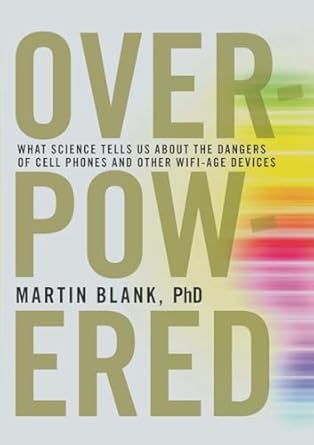
For a comprehensive exploration of EMF health effects and practical protection strategies, explore these books by R Blank and Dr. Martin Blank.